Trigger Warning: graphic violence & gore; self-harm & suicide themes; drug use & addiction; mental health crisis; domestic & emotional abuse; death of minors; religious/occult imagery; sexual violence; sexism & patriarchal control; spoilers.
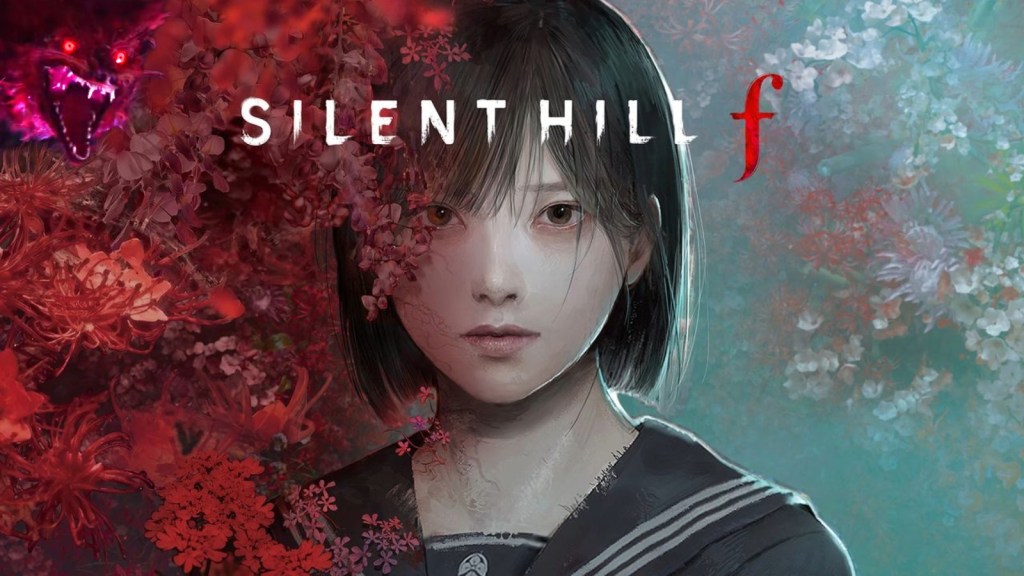
When Silent Hill ƒ was first announced, many fans expected the familiar fog-shrouded streets of the series’ namesake town. Instead, we were pulled back to 1960s rural Japan, to a quiet mountain village where old traditions linger like incense smoke. The result is both classic and startlingly new: a slow-burn horror story wrapped in folklore, family duty, and the gnawing dread of a mind at war with itself.
As I don’t have the game or a system to play it on, I watched a friend’s full playthrough (offline) rather than playing firsthand, but the experience was no less gripping. The game layers personal trauma, cultural symbolism, and body horror into something that feels as much like a fevered folktale as a survival-horror thriller. What follows is my deep dive into the opening chapters and the psychological themes that begin to surface.
What Does the “ƒ” Stand For?
Konami has never confirmed what the single “ƒ” in Silent Hill ƒ actually means, and that deliberate ambiguity has fueled plenty of fan theories. A few of the most common (and most intriguing) interpretations include:
- Musical reference – “forte” or the note F
In musical notation, ƒ denotes forte, meaning “strong” or “loud.” It could hint at the game’s surging emotional intensity, or at a single resonant note—F—that underscores the soundtrack’s dissonant score. - Flora and fungi
The game is drenched in plant and fungal imagery—blood-red spider lilies, invasive roots, creeping mold. Some players link “ƒ” to horticultural shorthand for plant “filial generations” (F1, F2) or even to “fungus,” both fitting the game’s themes of growth and decay. - Fate / Fear / Freedom
More metaphorical readings see the letter as an open cipher for the story’s core ideas: fate (the divine curse that binds Hinako), fear (the psychological horror), or freedom (Hinako’s ultimate triumph in both the Good & True Endings). - Fox
Given the central role of the mysterious Fox Mask and fox-spirit folklore in the plot, some fans simply treat the “ƒ” as a stylized stand-in for “fox.”
Part of the fun is that none of these explanations cancel the others out. Like the rest of Silent Hill ƒ, the title remains an elegant riddle; an invitation to project your own meaning onto a story already steeped in ambiguity.
~ Warning: Contains Heavy Spoilers ~
Silent Hill ƒ drops players into rural 1960s Japan, in the quiet mountain village of Ebisugaoka; loosely inspired by Kanayama, Gero in Gifu prefecture. The setting is all dark timber and tatami, every house (including the Shimizu family home) built in the traditional ryokan style. It feels serene at first, but that calm is a façade. The game is long and deliberately paced; I’m focusing on the most important early story beats, because much of the runtime is exploration, combat, and uneasy silence.
Childhood Memory, Adult Dread
The opening cinematic unfolds from a first-person memory of Hinako Shimizu, a little girl clutching a blond doll in a crimson dress. She chats with her older sister Junko about a woman’s duty to marry, an expectation Hinako rejects even as a child. Junko dismisses it as “just like homework,” and young Hinako agrees: marriage sounds like another tedious assignment.
The memory fades. Hinako is now sixteen, in a crisp high-school uniform, sitting on an outdoor bench in the family compound. Junko approaches in a fine kimono. Their conversation is tender but tense: Hinako recalls the comfort of their childhood bond, while Junko offers a long hug and accepts a small bell charm to tuck into her obi. The moment reads like quiet resignation. My reading? Hinako has just learned of her arranged marriage, and Junko, already married, tries to comfort her. To Hinako, the embrace feels like both love and abandonment.
A slow pan across Ebisugaoka follows: mist over rice paddies, dark cedar mountains, a lonely torii gate. The camera finally rests on the Shimizu home as the title appears, a classic Silent Hill overture of beauty edged with menace.
A Mind Unraveling
Here’s the crucial context: the game’s events play out inside Hinako’s mind, though her actions bleed into reality. In truth she’s in her early twenties, spiraling through addiction to pills supplied by her childhood friend Shu. The hallucinations and “otherworld” sequences we see are part drug trip, part psychotic break. While the monsters are imaginary, Hinako’s violent outbursts are not: by the default ending, we learn she kills nine people (ten casualties total) during a public breakdown at her own wedding.
This knowledge reframes everything: the game is a traumatic fever dream overlaying a very real mental-health crisis.
Family Fracture and Flight
Back in the “present,” the Shimizu household erupts. Her father, drunk and desperate, has promised Hinako to a wealthy suitor named Kotoyuki Tsuneki (my nickname for him is Moneybags) to erase the family’s debts. Hinako storms out mid-argument while her father slurs about opportunity and duty.
Taking control for the first time, we guide Hinako through mountain paths toward the village general store. She mutters to herself—“Never. No way.”—a quiet manifesto of resistance. From a nearby window a friend sneers “traitor,” promising to come down soon, another sign of social pressure closing in.
Partners in Defiance
Outside the store waits Shu, the steadfast childhood friend who calls her “partner,” a holdover from their imaginary Space Wars games. He treats her as an equal, not a fragile girl. “Whatever you decide, I’ll support you,” he says, hinting at both his unspoken love and her looming choice.
Soon their other friends arrive: Sakuko, gentle and bunny-obsessed, and Rinko, bossy, sharp-tongued, and obviously jealous of Hinako’s closeness with Shu. Their banter sketches a believable teen circle just as the world begins to rot.
First Blood: Fog and Spider Lilies
A creeping grey fog rolls into the village, carrying a sweet-metallic dread and harboring a large, shadowy creature of pure dread. Sakuko collapses, skin erupting in crimson welts, as blood-red spider lilies bloom where she falls and spread out. It’s a startling image: beauty and death entwined; a flower long associated with Japanese funerary rites. The group scatters, Shu and Rinko one way, Hinako another, ushering the player into the first true chase sequence.
Here the game introduces its first monsters: Kashimashi, unsettling female mannequins with slick, dog-like feet. Their jerky elegance recalls the series’ tradition of creatures as psychological projections. After a frantic skirmish, Hinako circles back to Sakuko’s body, tenderly covering it with a cloth/tarp before moving it inside the general store before moving on; a small, heartbreaking act of respect amid chaos.
Crossing to the Otherworld
Hinako eventually collapses after a skirmish and wakes in a blackened shrine: the game’s “otherworld,” a dream within her dream. This is where she meets the mysterious Fox Mask, a refined, soft-spoken figure who exudes calm menace. He seems kind but undeniably has an agenda. We won’t learn until much later that he mirrors her real-world fiancé, Moneybags, in symbolic form: a personification of the trap she’s desperate to escape.
A recurring motif is Hinako’s childhood doll; the same blonde-haired figure in a crimson dress from the opening memory. It reappears at pivotal moments, almost like a breadcrumb trail through her unraveling psyche. Each time Hinako spots the doll, a scrawled warning is nearby: Do not trust the Fox Mask.
The effect is haunting. The doll feels like a fragment of her younger self, a silent witness to innocence lost, while the accompanying messages suggest a subconscious plea for self-preservation. Whether these warnings come from some protective corner of her own mind or from an external force is never clear, and that ambiguity heightens the tension: is Hinako’s inner child trying to save her, or is the nightmare world manipulating her with symbols of comfort?
As the game unfolds, Silent Hill ƒ forces the player into a series of choices: moments where Hinako must confront friends and family in nightmarish “boss” encounters. These fights take place either in the shrine-like Otherworld or within Hinako’s own distorted version of reality. Each confrontation underscores a central theme: to survive, Hinako is asked to discard the very pieces of herself that once brought joy. The path to “endurance” is a surrender to misery.
The shrine rituals with Fox Mask mark the point of no return. In one harrowing scene, Hinako saws off her own arm, which is then replaced with a feral, fox-like limb. Later, she allows her face to be cut away and supplanted by a lacquered fox mask. These acts aren’t mere body horror; they’re symbolic mutilations of identity. Hinako is literally reshaped into something subservient, a shrine-bound creature meant to appease powers she barely understands.
From this moment the narrative splits in two.
- The first Hinako, the one we have guided until now, is the sixteen-year-old who still dreams of freedom and self-determination.
- The second Hinako, born of these rituals, is her Shadow: her twin in every way, though an eventual thrall draped in a wedding shiromuku, armed with that lupine limb, and radiating bitterness.
The game stages multiple confrontations between these selves. Shadow Hinako prowls the fog as the faceless “bride,” openly hostile toward the confused schoolgirl she once was. It’s a literal embodiment of the present-day Hinako (early twenties, addicted, traumatized) trying to erase the hopeful girl she can no longer be. Lines of dialogue echo this split: Hinako whispers that she “doesn’t want to be like [her] mother,” a woman who surrendered her own agency to patriarchal tradition.
The family symbolism deepens with Junko. Inside Hinako’s psyche, her beloved sister wears a demon mask and carries the pallor of a corpse: grey flesh, lifeless eyes. It’s as if Junko is already dead in spirit, having traded freedom for conformity. To Hinako, her sister’s marriage is not just a loss but a kind of living death, a cautionary vision of what awaits if she too becomes someone’s possession.
After a tense stretch of exploration in the shadowy underworld, Hinako finally forces open a set of massive wooden shrine doors. The victory is short-lived: an unseen force slams into her the moment the doors creak wide, and everything goes black.
Back to the “Real” World
Hinako awakens to find Shu kneeling beside her, gently cradling her head. His face, equal parts worry and relief, makes it clear how deeply he cares for her. Blinking away the haze, Hinako remarks that the town is eerily empty and that monsters seem to lurk around every corner. Shu listens, clearly unsettled but focused on keeping her calm.
When Hinako asks about Rinko, Shu admits they were separated in the chaos.
He reasons that she might have gone home and suggests they head there. The two set off together through a fog that feels thicker and more disorienting than ever.
Fog, Familiar Memories & Reunion
At one point Hinako loses sight of Shu entirely, panic rising in the muffled silence, until his silhouette emerges on the path ahead. Relieved, she hurries to catch up. As they walk, the pair share quiet worries about Rinko and even drift into small memories of their childhood adventures, a fragile warmth against the encroaching cold.
They finally reach Rinko’s house. Before they can knock, the door flies open and Rinko rushes out, flinging herself toward Shu in a desperate embrace.
He stands stiff for a beat, polite but distant, while Rinko clings to him, her obvious relief tinged with a flicker of possessiveness. Hinako watches, the moment heavy with unspoken tension as the fog curls closer around them.
Rinko finally greets Hinako and Shu with frantic relief, insisting she’s safe but confessing that her entire family has vanished; even her grandmother, who can barely walk.
The three move indoors and climb the narrow stairs, the creak of old wood loud in the silence. Upstairs, Rinko’s composure begins to crack; she speaks in a rush of half-formed fears while Shu and Hinako stay steady, promising they’ll find help and that staying in the house is not safe.
Rinko suddenly points to the window. Through the milky fog they see it: the great iron bridge, twisted and broken, the only direct road out of Ebisugaoka village. A collective chill runs through them, but Shu rallies first. There’s still the mountain highway behind his house, he explains, a treacherous route but their best chance. “We’re not abandoning anyone,” Shu tells Rinko, voice firm. “But we have to survive if we’re going to bring help.” Hinako nods, backing him up.
Plans and Uneasy Silence
Shu suggests a shortcut through the wasabi fields and reminds them they’ll need supplies. Rinko remembers a first-aid kit in the kitchen and volunteers to fetch it. Hinako offers to go with her, and Shu agrees to stay upstairs, presumably gathering anything else they might need.
As the two girls descend the stairwell, the house seems to grow quieter, the air heavier. “Where’s the kitchen again?” Hinako asks lightly over her shoulder. Rinko doesn’t answer. Instead, she watches Hinako with an expression that curdles from jealousy into something darker.
Halfway down, Hinako catches a flicker of red at the bottom of the steps: the childhood doll, waiting once more, scrawled words beside it reading “Beware Rinko.” Before she can turn, Rinko’s hands slam into her back. Hinako pitches forward, crashing to the floor below. The world fractures into black.
Return to the Otherworld
She wakes to silence and the cold, pulsing atmosphere of the Otherworld. The wooden walls of Rinko’s house have melted into shadowed shrine pillars; the air hums with a low, unearthly vibration. Whatever Rinko has become, the nightmare has taken hold again, and Hinako’s descent into the Dark Shrine begins anew.
A single lantern flickers nearby. She snatches it up and begins searching the shrine’s shifting corridors, shadows lurching like restless spirits.
In the distance, a faint silhouette (Fox Mask) glides through the gloom, a silent guide she can never quite catch. “Why doesn’t he wait for me?”
The path teems with monsters. Hinako darts through twisting halls until she finds a chamber where a naginata rests across an altar, its blade gleaming dully in the lantern light. As she lifts the weapon, a familiar voice pierces the silence: Sakuko, accusing and sharp.
“You left me… traitor.”
Hinako pleads into the dark, apologizing, but the voice only grows colder as she dodges prowling creatures, following the sound through maze-like passages.
Eventually she discovers a stone bell and places it in the gaping mouth of a fox statue beside another set of massive doors. With a heavy groan the doors unlock.
The Bridge of Betrayal
Beyond lies a long wooden bridge, mist curling around it like ghostly fingers.
At the center waits the Sakuko-like entity: a vengeful wraith in a tattered shrine-maiden’s garb, brandishing a spiked club and a chain-sickle. A keyhole-shaped void gapes through her chest, a wound that seems to breathe.
“I will save you. Purify you. Traitor!” the wraith shrieks before lunging.
A brutal fight follows. Hinako’s new naginata rings against the wraith’s chain, sparks scattering into the fog. At last the creature collapses, only to surge back with a final, sudden attack. Hinako stumbles to the planks, breath caught.
From the shadows, Fox Mask appears and moves with supernatural grace, placing himself between Hinako and the charging spirit and shielding her. He takes no damage as he raises one elegant hand; a shimmer of spiritual force bursts outward, banishing the wraith in a single strike. “How foolish of an evil spirit to enter this place,” he murmurs. “What was that?” Hinako asks, voice trembling. “An impurity that haunts you no more,” he replies, “we walk in this world of impurities, but we can ward them off.” With a gentle gesture he signals her onward.
Ritual Ablution
“Sacred ground lies ahead of us. Before we enter, we must be cleansed.” They arrive at a shrine-like font of crystalline water, where Fox Mask uses a ladle to wash, water glinting like liquid moonlight. Once done, he invites Hinako to do the same; a quiet ritual of purification before whatever lies beyond the next set of heavy doors.
Hinako steps hesitantly toward the stone purification font, expecting cool mountain water. Instead, the basin seethes with bubbling lava (or molten metal), red light flickering across the shrine walls. Panic grips her chest. “Calm yourself,” Fox Mask says softly. “It is but water.”
She forces herself to look again and finds only clear, placid water. Still trembling, she ladles a small amount into one hand, then the other, the liquid reassuringly cool against her skin. But when she cups water to her lips and spits it out, the taste scorches her tongue. The basin is once again molten, the water roiling like a volcanic vent. Across the shrine, her childhood doll appears, its painted eyes fixed on her. On the pillar behind it, fresh words read: “Don’t trust the Fox Mask.” The world tilts and fades to black.
Back to the Stairwell
Hinako slowly awakes at the bottom of the staircase in Rinko’s house. Shu is kneeling beside her, shaking her shoulders and calling her name, his voice tight with worry after he rushed to her aid. Her thoughts come slowly, like surfacing from a deep, cold lake. From the stairs above, Rinko descends with unsettling calm, her tone flat. “You klutz. You fell down the stairs,” she says dryly, as if nothing at all has happened.
Shu notices something strange: Hinako’s right sleeve is missing, torn away and nowhere to be found. “I must’ve caught it on a nail,” Hinako murmurs, still groggy. “That’s good to hear,” Rinko replies, expression unreadable, before turning and walking casually into the bottom floor hallway.
Hinako’s suspicion hardens: she knows Rinko pushed her. The memory of that sudden shove flashes again, cold and undeniable. From the doorway Rinko waits, face composed, as if nothing happened. “What’s wrong?” Shu asks, catching the unease in Hinako’s eyes.
“Nothing,” she answers quickly, pushing the thought down. There’s no time to dwell on betrayal. “We need to get going.”
Rinko softens her voice for Shu, almost coy. “You’re going to protect me, right? I’m not tough like Hinako, you know.”
“Yeah, don’t worry. Stay close,” Shu replies, a hint of exasperation slipping through.
Fractures in the Trio
He steps outside first. Hinako and Rinko reach the door together, but Rinko shoulders past, an almost imperceptible jab of dominance. Hinako swallows her dismay and follows, the sting of jealousy and fear a knot in her chest. “All right,” Shu says, taking point. “Back road, then mountain, then highway. Rinko in the middle, Hinako at the rear.”
Hinako casts one last look at Rinko’s house, the memory of the shove flickering like a warning flare. She tried to hurt me. Maybe even kill me.
“Leave the back to me…” she sighs, settling into place.
They trek across the mist-draped wasabi fields, their breath turning to pale ghosts in the night air. After a while they take a brief rest. Rinko breaks the silence with a sharp edge. “Shu, how much longer are you going to keep up this ‘partner’ thing? You talk to her like a schoolboy.”
“I call her my partner because she’s my partner,” he says flatly. “I’ve never treated her like a girl.”
Rinko smirks. “Yeah, come to think of it… you haven’t.”
Shu exhales, disgust clear in his voice. “Enough small talk. Let’s go.”
Hinako lingers behind them, sadness flickering across her face.
A little farther on, still among the low green rows, Shu tries to lighten the mood.
“Hey, partner, is it me or are there more of those monsters around?”
Hinako manages a small smile. “I don’t know. But when we used to play Space Wars, aliens always kept popping up.”
Rinko cuts in, voice sharp. “Did anyone ever tell you you sound manly when you talk to Shu?”
Hinako stammers, “Just… got into the habit of talking like this, I guess.”
“We’ve been hanging out since we were little kids,” Shu adds, trying to defuse the moment.
“Huh… so that’s why the two of you never got into a relationship, huh?” Rinko presses, her tone sly.
“We don’t need to talk about that right now. Let’s go,” Shu snaps, finally losing patience.
Hinako lags a few steps behind, the night air heavy with things unsaid; jealousy, betrayal, and a friendship she’s no longer sure ever existed.
Toward Shu’s House
After hours of careful travel the trio finally approaches the wooded slope near Shu’s home, only to find the path crawling with monsters. Hinako freezes. “We can’t go that way.”
Shu scans the writhing silhouettes and nods. “You’re right. We’ll go around. The middle school backs onto the mountain path; if we cut through there we can avoid the town. It’ll take longer, but it’s safer.”
They set off again, the fog growing thicker, until the group is briefly separated in the twisting lanes. When Hinako catches up, she overhears Rinko’s low, needling voice: “…you really think you can fool Hinako?”
Shu’s reply is curt, dismissive, but before more can be said Hinako steps into view. Shu’s face lights with relief. “Oh, he wasn’t worried about his precious partner,” Rinko mocks, brushing past them. Hinako offers Shu a quiet “Thanks for believing in me,” and they press on. Another brief separation follows, leading to a tense scene at a river overlook. Hinako arrives just in time to hear raised voices.
“Cut it out! I don’t want to talk about this right now!” Shu snaps.
“I’m not gonna cut it out,” Rinko fires back. “I’ll keep bringing it up until you snap back to reality.”
“I said knock it off. Seriously.”
Then Rinko blurts the daggered line: “Fine—I’ll just say it. Hinako’s dead, okay? She’s gone. She’s living a better life in another world.”
Hidden in the fog, Hinako hears every word. By the time Shu turns and notices her, his tone has softened again. “Oh, partner, there you are. What took you so long? Come on, let’s keep moving.”
The Middle School Grounds
They climb the long stone stairway to the abandoned middle school, the air damp and echoing with cicadas. Outside the main building stands a chain-link gate leading to the mountain highway beyond; locked and chained, though none of them remember it ever being secured before.
The fence is barely shoulder height; in any other situation they could vault it in seconds. But in true survival-horror fashion the way is sealed, forcing them to search the dark, empty school for the elusive key.
Inside the silent middle school the trio finds, for the first time in hours, no sign of monsters. The hallways smell of old chalk and damp wood, a ghost of lessons long past; they enter classroom. Rinko slumps into the nearest desk with a heavy sigh. “I need to rest,” she mutters, head bowed. Shu glances at Hinako. “You must be tired too. Sit for a bit—I’ll look for the key.” But Rinko immediately protests, her voice sharp with need. “No, stay here. I want you with me. Please, Shu, don’t leave. You led from the front the whole way. Hinako just tagged along. Let her look for the key.”
“What do you mean she just ‘tagged along’?!”, Shu protested.
The air grows thick with the awkwardness of her plea. Hinako steps forward, steady and firm. “Both of you should rest. I’ll search for the key.”
For a moment neither friend speaks, the only sound the creak of old floorboards. Shu meets Hinako’s eyes, torn between concern and trust, then finally nods. Rinko says nothing, but her quiet resentment hangs in the stale classroom air as Hinako slips into the shadowed corridor alone. Shu starts to say something as Hinako slips into the hallway, but Rinko pulls him to her, urging him to stay. The door clicks shut behind Hinako and the corridor falls into an uneasy hush.
Whispers Through the Glass
A familiar voice breaks the silence, “Do you want to stay with your friends forever?”
Hinako turns toward a nearby classroom. Through the frosted glass she sees the silhouette of Junko, her older sister. “They’ll betray you,” the shadow murmurs. “Just as they say you betrayed them. Whether their worth is justified… that is for you to decide.”
The figure drifts away from the window without a sound. Hinako rushes inside, only to find an empty room, dust motes swirling in the beams of daylight through windows. Confusion knots in her chest, but she forces herself onward to search for the key; which she finds after some exploration.
Temptations and Tension
Key in hand, Hinako returns to the classroom but stops just short of the door.
Inside, Rinko’s voice lilts with forced playfulness: “C’mon, we can play our own version of Space Wars if you want. I could be your partner… or maybe a femme fatale.”
The words sting. Hinako pushes the door open. Shu leaps to his feet, startled.
“I found the key,” Hinako says evenly.
“Welcome back. Sorry for the trouble,” Shu replies, accepting the key.
“You should rest now,” he adds gently.
“No. I’m all right,” she protests.
Both Shu and Rinko insist until Hinako finally nods, lowering herself into a desk.
The pair step into the hallway to stand guard, leaving her in the quiet classroom.
Another Descent
Hinako rests her head on folded arms, eyelids heavy. Sleep takes her and the Otherworld claims her again. Fox Mask’s voice is the first thing she hears:
“You’ve saved my life and laid claim to my soul. In return, I’ll save your soul by claiming the life of your old self.”
She stirs, realizing she’s been resting with her head on his lap, his presence both comforting and unnerving. “You need to rest,” he murmurs. “You’ve been pushing yourself. Perhaps the purifying water was too strong for you. You are far more delicate than I had realized.”
He commends her perseverance, a note of admiration in his tone. Hinako rises, resolute. Together they push open another set of heavy wooden doors, stepping into a pitch-black corridor where the darkness feels alive, ready to swallow every trace of light.
The corridor ahead yawns like a throat of stone.
Fox Mask’s voice drifts through the blackness, smooth and final.
“Go ahead and say your farewells,” he intones. “I will begin making arrangements.”
“Yes…,” she says more to herself than anyone else, in a brainwashed cadence.
Hinako tightens her grip on the lantern and moves on, the words echoing behind her like a benediction and a threat. She navigates a maze of locked doors and hidden keys, each chamber more warped than the last, until she pushes open a heavy iron door and steps into a furnace-lit hall.
The Cage Above the Fire
Before her hangs a metal cage, chains groaning as it sways over a pit of glowing lava (or molten metal) so bright it stings the eyes. Inside, Rinko clutches the bars, her face twisted with rage.
“Just for once, think about how he [Shu] feels!” she screams. “You’re a traitor! You played with his heart! Say you’re sorry! Get on your knees and beg for forgiveness! Can’t you hear me?! Why don’t you say something?!”
The chain begins to descend, slow and merciless as Hinako turned a lever. Rinko’s voice grows hoarse, a mix of fury and desperation, until the cage plunges into the molten glow. Her final cry is swallowed by the hiss of vapor and the roar of the pit.
Hinako watches without flinching. No gasp, no protest; only the quiet reflection of the fire in her eyes. When the last bubble of molten metal bursts, she turns and walks calmly out of the chamber, utterly desensitized, as if another piece of her humanity has been burned away with her friend. More exploration ensues.
The Cage of Forgotten Promises
After winding through more of the shrine’s shadowed halls, Hinako enters a chamber lit only by the dull glow of foxfire. Inside, Sakuko crouches in a rough wooden cage, a haunting echo of the rabbits she once adored.
At the sight of Hinako she rushes to the bars, eyes wide with hope. “Wait! Come back! I don’t want to be alone. Please help me! You promised we’d always stick together! Wait… you traitor!”
Hinako’s face remains unreadable. She turns silently and closes the door, leaving her friend to sob in darkness. The muffled cries follow her down the corridor, but she does not look back.
The Birthing Monster
Her path winds deeper, eventually leading to a grotesque confrontation with a spawning creature; a faceless, pulsing mass that endlessly produces shrieking, half-formed offspring. Hinako fights with cold precision, felling the nightmare and moving on without a flicker of emotion.
Farewell to Shu
The next chamber is a gloomy, candle-lit hall, heavy with incense and dread.
There, Shu hangs suspended by three chains: one binding each arm, another locked around his neck. His voice is faint but tender: “You… came back… partner. I wanted… it’s okay, partner… whatever the outcome. I’ll respect my partner’s choice.”
Without a word or change in expression, Hinako walks to a lever set into the wall and pulls it down. The arm chains release with a metallic snap, dropping Shu’s weight onto the collar. He jerks downward, slowly strangled as the chain tightens. Hinako watches only long enough to ensure the mechanism holds.
Then she turns and leaves, the heavy door closing on his fading breath.
The Fox’s Embrace
Fox Mask waits beyond, stepping close to drape an arm across her shoulders.
“It must be hard to bid farewell to your childhood friends,” he says.
“Yes…” Hinako answers, her voice distant, shell-shocked, though a faint sorrow slips through. “No. It had to be done. As soon as I could.”
“I’m so very sorry for what you just saw,” she adds, almost ritualistically.
“You should not apologize,” Fox Mask replies softly. “I should apologize for forcing this pain upon you.”
Hinako rests her hand on his, the gesture almost automatic. She has endured so much that standing at his side now feels inevitable.
“Onward,” he says.
A sudden splitting migraine drives her to her knees. The world blurs, then collapses into darkness.
Back to the Classroom
Hinako slowly awakens at the desk where she’d fallen asleep in the middle school. The cold chalky air replaces the scent of incense; the nightmare recedes, but its weight lingers. Her friends’ fates, whether dream or truth, hang over her like a shadow she can no longer shake.
The dim classroom bathed in the thin gray of early morning. For a moment she expects to hear Shu or Rinko whispering nearby; but the room is silent. The door stands ajar, creaking slightly in the draft. Neither of them even bothered to close it.
Heart quickening, she searches the school’s dark corridors, calling their names.
No answer. No footprints. Only the echo of her own steps and the faint smell of damp chalk.
The Open Gate
At last she reaches the mountain gate; the chain-link fence that had barred their escape. The heavy lock dangles open, the gate itself yawning wide. They left without her. The realization cuts deeper than any monster’s claw: Shu and Rinko have gone on alone, not even pausing to wake her, to warn her, to say goodbye.
Hinako stands in the cold mountain air, hurt and bewildered, a knot of anger and sorrow tightening in her chest. The night that had already taken so much has delivered its final cruelty: abandonment by the only friends she thought she had left.
What I’ve described thus far is roughly one quarter of the game and I’m going to stop my plot summary here. I shall now relay the 5 endings.
Exploring the Endings
As Hinako’s journey deepens, the boundaries of reality keep collapsing. She moves through the Otherworld, a shifting shrine of black stone and foxfire; distorted echoes of her school and childhood home, where familiar hallways stretch into impossible angles; and the village streets themselves, now overgrown with crimson lilies and crawling fog. Each space reflects a different shade of her psyche: betrayal, despair, and the slow slide into madness.
While exploration and frantic combat drive most of the gameplay, the story ultimately hinges on how her fractured self resolves. Silent Hill ƒ offers five possible endings: Default, Good, Bad, True, and the series-tradition UFO epilogue, each one coloring Hinako’s fate and the game’s meaning in a different way. Below, I break them down in turn.
Default Ending – Coming Home to Roost
This is the only ending players can get on the first playthrough. The so-called “default” ending begins with Hinako returning to her family home after the nightmare wedding. What should be a moment of reconciliation instead becomes the final break: her father coldly tells her she no longer has a place there. In that instant she transforms, white wedding robes twisting into a monstrous bridal form, and murders both parents.
This climax reframes the entire game. Earlier, we’d witnessed a surreal wedding to Fox Mask, implying Hinako had been married off to Kotoyuki. The playable Hinako we’ve guided may in fact be her psyche’s last desperate attempt to stay sane and fight the “criminal bride” emerging inside her. But she ultimately succumbs to the lure of the red capsules and the trauma they amplify.
The post-credits scene confirms the horror. Over a crackling police radio we learn that Hinako was the true wedding-shrine killer, responsible for eight deaths during the ceremony before stabbing her father and critically wounding another man (Shu). She flees into the night, knife in hand; a fugitive whose mind and body have been hollowed out by drugs and despair.
It’s a bleak, cyclical ending: the innocent schoolgirl we’ve been playing all along was only ever a fragment of a woman already lost to addiction and violence.
Good Ending – Fox Wets its Tail
In the Good Ending, Hinako finally refuses every hand that tries to shape her life. She rejects Fox Mask’s love and control, standing firm against both her parents’ demands and the supernatural suitor’s carefully phrased manipulations. During the climactic battle, Fox Mask plays the wounded romantic, insisting he has sacrificed everything for her happiness; yet he never once listens to what Hinako actually wants. Shu intervenes to help Hinako.
After the fight she acknowledges the fox’s kindness but draws an unmistakable boundary: what he offers is not the life she chooses. It’s a quiet but profound victory: Hinako defines herself on her own terms, no longer a daughter to be sold or a bride to be claimed. She and Shu run away together.
The post-credits scene provides a final, ambiguous coda. Geysers erupt across Ebisugaoka, forcing the villagers to evacuate. The sudden geological chaos hints that Fox Mask was more than a lover or illusion: perhaps a guardian deity whose defeat unbound the land itself. His earlier line, “I forced myself to abide by human rules for you,” lands differently now, suggesting that his restraint kept the natural world in check. By winning her freedom, Hinako may have cost the village its protector. However, true love prevailed and you love to see it.
Bad Ending – Fox’s Wedding
The Bad Ending, aptly titled Fox’s Wedding, plays like a grim surrender. Here, Hinako accepts her parents’ wishes and becomes the bride of Fox Mask/Kotoyuki, effectively abandoning her own autonomy. Shu’s earlier sabotage, slipping her the addictive red capsules in a misguided attempt to make her “unfit” for marriage and keep her close, only tightens the tragedy.
The post-credits sequence twists the knife: we see Kotoyuki speaking to a veiled Hinako in her wedding dress, the same faceless bride hinted at in the first ending. When her mask is torn away, Hinako’s true face is revealed beneath, screaming for help and pleading not to “end up like [her] mother.” It’s a moment of pure anguish, as though her consciousness remains alive inside a body she no longer controls. Her screaming face, on the street, is then run over by a vehicle.
Symbolically, the torn-off face suggests the complete erasure of will; the sacrifice of self demanded by patriarchal tradition. Hinako destroys her friendships, her agency, and even her own identity in order to fulfill the role of the “ideal wife.”
This was, for me, the hardest ending to watch. The muffled, panicked cries carry an unsettling undertone, evoking the fear and violation of someone trapped in a role they never chose. It’s horror not just of monsters, but of a culture and family that demand the ultimate self-annihilation.
‘True’ Ending – Ebisugaoka in Silence
The True Ending grants Hinako the freedom she has been fighting for since the first scene. Here she defies her ordained fate, reconciling at last with her other self, Shadow Hinako, and uncovering the cosmic machinery behind her suffering.
The Gods reveal a chilling truth: Hinako was born a rare child imbued with divine power, her existence itself casting a spell over the heir of Fox Mask’s clan and compelling him to seek her as a bride. This revelation reframes the entire conflict. It wasn’t merely family ambition or village tradition that pushed her parents to marry her off to Kotoyuki, as implied in Coming Home to Roost; it was a supernatural decree woven into her birth.
After defeating these higher powers, Hinako returns to a quiet, evacuated Ebisugaoka with her shadow at her side. The final image shows her standing at the crossroads of her own life, free at last to choose her future. No arranged marriage, no divine mandate; only a vast, uncertain freedom.
It’s the second-most hopeful resolution the game offers: the girl who once felt doomed to repeat her mother’s life now walks into silence, her fate finally her own.
Joke Ending – Great Space Invasion
True to Silent Hill tradition, the UFO Ending abandons tragedy for pure, meta comedy. Presented as a retro, comic-book slideshow, it follows Hinako, Shu, and Rinko as they joke that UFOs must be behind Ebisugaoka’s emptiness.
Their theory escalates when Sakuko bursts in piloting a giant Shiromuku robot designed to detect aliens. To “prove” everyone is human, the girls gleefully expose one another’s embarrassing secrets, while Shu’s own attempt backfires and earns him a friendly beat-down.
Just as things peak in absurdity, Hinako’s parents appear, insisting she return home and cheerfully explaining that the town watch already scared off the UFOs. The trio heads home, laughing… until the camera tilts skyward to reveal a dog piloting a saucer, wagging and barking as it zips away.
Like the gag endings in earlier Silent Hill games, this finale is a winking nod to longtime fans, offering a silly palate cleanser after the series’ usual psychological darkness.
The Characters of Silent Hill f
Hinako Shimizu – The main protagonist of Silent Hill ƒ. Once a bright and carefree child, Hinako is now a teenage girl forced to navigate the cursed streets and shifting realities of Ebisugaoka. Her journey, split between the (seemingly) waking world and a hallucinatory Otherworld, mirrors her struggle with addiction, trauma, and the fight to reclaim her own agency.
Junko Kinuta (née Shimizu) – Hinako’s older sister and the Shimizu family’s “golden child.” Beautiful, poised, and outwardly kind, Junko represents the life Hinako dreads: a woman who has already surrendered personal freedom to social expectations. In Hinako’s visions, Junko wears a demon mask and bears a corpse-like pallor, a haunting emblem of spirit lost to conformity.
Kanta Shimizu – Hinako’s father, an alcoholic whose mounting debts drive him to arrange her marriage to Kotoyuki. His desperation and casual cruelty ignite much of Hinako’s rebellion, making him both a tragic figure and a symbol of patriarchal control.
Kimie Shimizu – Hinako’s mother, who believes a woman’s happiness begins—and ends—with marriage. She continually urges Hinako to follow tradition, embodying the generational pressure and internalized patriarchy that Hinako fights to escape.
Shu Iwai – Hinako’s childhood friend and confidant. The two affectionately call each other “partner,” a reflection of their deep trust. Shu comes from a family of physicians and is knowledgeable about medicine and treatments; a skill that becomes pivotal as he both aids Hinako and, intentionally or not, enables her drug use with the red capsules.
Sakuko Igarashi – A schoolmate of Hinako and Shu’s and the first tragic victim of the village’s supernatural infection. Raised in a family that manages the local Shinto shrine, Sakuko carries a quiet knowledge of rituals and traditions and bunnies. Her early death signals the collapse of everyday normalcy and the encroachment of the Otherworld.
Rinko Nishida – Another close friend in the circle. Rule-abiding on the surface, Rinko enjoys gossip and the thrill of romance. She quietly nurses a crush on Shu, a detail that adds subtle tension to the group’s friendship as events spiral out of control.
Fox Mask – The enigmatic guide of the Dark Shrine. Cultured and soft-spoken, he professes unwavering devotion to Hinako and protects her from harm, yet his affection masks a possessive agenda. Whether guardian deity, supernatural suitor, or projection of Hinako’s divided psyche, Fox Mask embodies both temptation and captivity. His true form is that of a giant red fox named Shichibi and serves Kyubi, the giant black fox guardian deity of Ebisugaoka.
Kotoyuki Tsuneki – Hinako’s suitor in an arranged marriage. He is really Hinako’s childhood friend; a boy who was bitten by a fox and moved from Ebisugaoka, but still kept in touch with Hinako via written letters. He and Fox Mask are one and the same; he was possessed by the nine-tailed fox deity of Ebisugaoka.
Setting Notes: Ebisugaoka (戎ヶ丘)
Ebisugaoka is a fictional rural town tucked into a remote mountain pass, its quiet streets echoing the real-life Kanayama district of Gero in Japan’s Gifu Prefecture. Once prosperous from coal mining and dam construction, the town has slipped into decline, and the grand iron bridge leading to the city now stands as a rusting monument to better days; a literal and symbolic link to a vanished future.
The name itself carries weight. Ebisu (恵比寿) is one of Japan’s Seven Lucky Gods, a deity of fishermen, commerce, and prosperity. Pairing his name with oka or gaoka (“hill”) creates a quiet irony: a “hill of prosperity” that has fallen to decay. The choice underscores the game’s recurring tension between past abundance and present emptiness.
Writer Ryukishi07 selected Kanayama for its evocative architecture and “labyrinthine alleyways,” perfect for Silent Hill’s trademark sense of disorientation. The development team took extensive reference photos and recorded ambient sounds of daily life (cicadas, creaking bridges, the hush of mountain wind) to ground the game’s surreal horror in authentic texture.
To capture the feel of 1960s Japan, designers pored over historical materials: period signage, wooden ryokan-style homes, rural industrial sites. Small details (the weathered beams of a train platform, the muted tones of Showa-era storefronts) give Ebisugaoka a lived-in realism even as supernatural chaos slowly overtakes it.
The Monsters of Silent Hill f
One of the most unsettling touches in Silent Hill ƒ is how some creature names themselves hint at sound and sensation. Many draw from Japanese onomatopoeia, words that imitate noises or convey a “feel,” making the names almost tactile before you even see the monsters.
Kashimashi
- Appearance: A humanoid mass of stitched flesh with doll-like joints and canid-like legs, wielding a rusted knife. Its malformed face stretches into a fixed, unsettling smile as it lurches forward.
- Journal Entry: “A monster that appears to be lumps of flesh stitched together. It approaches with an unsettling smile when it catches sight of me. It’s covered all over with sickening wounds. I wonder if it wants to hurt me the same way it was hurt.”
- Onomatopoeia: A real Japanese term that conveys noise, commotion, lively chatter. It recalls the proverb – “When three women gather, it becomes noisy.”
The kanji 姦 (kashi) can imply “boisterous” or even “scandalous,” and the suffix –shii makes it an adjective. Using it for a stitched-together, knife-wielding doll hints at chaos and a clamor of suffering; a body as loud and unruly as the word itself. - Notes: A classic Silent Hill projection: pain visited upon the innocent until the victim becomes the aggressor.
Ayakakashi
- Appearance: Scarecrow-like figures dressed in tattered farm clothes, hanging slack as though crucified until they spring to life, swinging wicked farming sickles.
- Journal Entry: “A moving scarecrow, or at least a monster that pretends to be a scarecrow. It’s dressed in old clothes and looks like a crucified corpse from far away. Contrary to its name, it scares more kids off than crows.”
- Onomatopoeia: Traditionally a kind of yōkai; a supernatural phenomenon often glimpsed at the surface of water, where sea and sky meet.
The word evokes mystery rather than sound, suggesting something glimpsed at the threshold of worlds. Giving this name to a scarecrow-like ambusher deepens the sense of an in-between creature: half object, half apparition, waiting to cross from stillness to violence. - Notes: Their farmyard disguise ties them to the village’s agricultural past and to the fear of rural isolation.
Glowing Monster
- Appearance: A grotesque creature crawling on all fours, veined with pulsating orange tendrils that light the fog. Its eyes glitter with hungry curiosity as it closes in.
- Journal Entry: “A particularly suspicious monster that walks around on all fours. The greedily staring eyes, the greasy palms, the way it acts all chummy with me… All of it is completely repulsive. What’s more, it never bothers with guys. Typical.”
- Notes: Its singling out of Hinako adds a layer of predatory menace; an almost personal violation.
Vomiting Monster
- Appearance: A shuffling tower of flesh, forever retching gouts of dark blood. Multiple faces writhe across its surface, whispering incomprehensible words.
- Journal Entry: “A face. Two faces, three faces, four… A monster with a thronging mass of faces. I’m not familiar with any of the faces, yet they seem to know me. It spouts repulsive things one after the other, violating the peace and quiet of wherever it goes.”
- Notes: Its chorus of unknown faces evokes the intrusive memories and judgments that haunt Hinako’s psyche.
Spawning Monster
- Appearance: A decaying, cyst-covered bulk that sheds reeking clumps of flesh, each one birthing new horrors to overwhelm its prey.
- Journal Entry: “A hideous monster covered in countless skin cysts. It spawns monster after monster from the dreadful-smelling clumps of flesh it drops. Filthy, foul, and repulsive. The wonders of birth do not apply to this.”
- Notes: A nightmarish parody of fertility; life corrupted into endless, meaningless replication.
Ara-abare
- Appearance: A towering, fleshy calamity draped in red spider lilies (higanbana), flowers tied to death and the afterlife. Its body pulses with chaotic energy, less an enemy than a natural disaster. One tendril is for lashing and the other carries a large knife.
- Journal Entry: (implicit) A storm of motion and violence.
- Onomatopoeia: Abare (暴れ): violent rampage or reckless flailing.
Combined, it’s a phrase that almost chuckles and screams at the same time:
“Oh my… rampage.” Fitting for the towering, red-lily-covered calamity that pulses with chaotic energy while carrying a strangely ironic name. Ara (あら): an exclamation of surprise (“oh!” or “oh my!”) often gentle or amused. - Notes: It looks like a giant meatball.
Blade Legs Monster
- Appearance: A contorted, mannequin-like figure with a rusted knife in one hand and razor-sharp blades in place of legs.
- Journal Entry: “A monster that possesses sharp blades for legs. Did someone sever both of its legs and replace them with such disturbing things so it couldn’t go anywhere? Or was this creature brought into existence just so it could end up like this?”
- Notes: The name isn’t overtly onomatopoetic, but the scraping, metallic sound of those bladed limbs evokes the clatter of steel on stone—a sound you can almost hear in the title.
Oi-omoi
- Appearance: A grotesque amalgam of celluloid doll parts fused into a single, sentient being with human legs.
- Journal Entry: “A bizarre monster that looks like a bunch of celluloid dolls intertwined. Each of these dolls was likely some child’s best friend. To think that it would appear like this in my nightmare…”
- Onomatopoeia: Not a set phrase in Japanese, but a playful fusion: Omoi (重い): “heavy,” physically or emotionally. Together they form an invented word that could mean “a heavy call” or “a burdensome cry for attention.” Perfect for a shambling mass of discarded dolls that feels both childish and crushingly sad. Oi (おーい): a casual call (“hey!”) to grab attention.
Drum Monster
- Appearance: Several taiko drums make up its torso and a massive crushing arm. Inside its gaping mouth sits a giant drum that it pounds with bachi-like limbs, each strike a thunderous command.
- Journal Entry: “A monster that has a large taiko drum inside its mouth. It swings around its large bachi drumstick-like arms and strikes the taiko to instill fear and command those bound to it. It tries to cancel out any noise with its loud voice and banging. That’s how it’s always been.”
- Name Insight: The blunt English descriptor belies the creature’s deeper resonance: the pounding taiko suggests matsuri (festival) rhythms twisted into a weapon, a celebration gone horribly wrong.
Boss Monsters of Silent Hill f
Sakuko-Like Entity
Clad in a blood-stained shrine-maiden (miko) outfit, this apparition wields both a heavy club and a wicked sickle, claiming to “purify” Hinako. It’s a grotesque echo of gentle, bunny-loving Sakuko; now a zealot whose ritual tools become weapons. The fight plays like a twisted exorcism, suggesting how even friendship can be warped by the oppressive spirituality surrounding Ebisugaoka.
Rinko-Like Entity
A towering parody of Rinko dressed as a Shrine Priest, dragging burning chains that hiss through the air. Her attack is part scourge, part judgment, as though gossip and romantic jealousy have calcified into literal punishment. The flames lick at Hinako like social shame made tangible.
Hinako’s Parents
Both mother and father reappear as contorted monstrosities, their limbs elongated into instruments of discipline. They don’t merely attack; they enforce, embodying the crushing parental expectation that drove Hinako toward drugs, hallucination, and rebellion. Defeating them is less a boss fight than an act of symbolic emancipation: the final break from a household that tried to own her future. Also, the father transforms into a giant meatball monster.
Shiromoku
Default Ending – “Coming Home to Roost”
Named for the pure white shiromuku bridal kimono, this final boss embodies the nightmare bride Hinako dreads becoming. Draped in funereal wedding silks and wielding a massive, clawed fox arm, the Shiromoku attacks with relentless elegance; an avatar of forced marriage and violent conformity.
Tsukumogami
Bad Ending – “Fox’s Wedding” / True Ending – “Ebisugaoka in Silence”
In this route Shu reaches the Dark Shrine, only to be twisted by regret and fear into the Tsukumogami, a term from folklore for everyday objects that gain a spirit after a hundred years. Here, Shu himself becomes a cursed “object,” a living relic of unspoken love and failed rescue. The fight is as much exorcism as battle, confronting the damage caused by his misguided attempt to control Hinako’s fate.
Shichibi
Good Ending – “The Fox Wets Its Tail”
When Fox Mask’s devotion curdles into possession, his true form is revealed: Shichibi, a colossal nine-tailed red fox with blazing red fur and eyes. This confrontation turns mythic: Hinako’s final stand against both supernatural destiny and romantic coercion. Each tail she severs feels like a choice reclaimed.
Kyubi
True Ending – “Ebisugaoka in Silence”
The ultimate guardian deity of the village, Kyubi is a towering nine-tailed black fox whose presence eclipses the shrine. In the True route, both Hinakos, schoolgirl and shadow, must fight side by side to slay not just a god, but the very forces that scripted their lives. Facing Kyubi alongside the corrupted Tsukumogami underscores the theme of divine oppression versus human agency, making this duel a literal battle for self-determination.
~ END~

 J-Horror Blog
Leave a comment