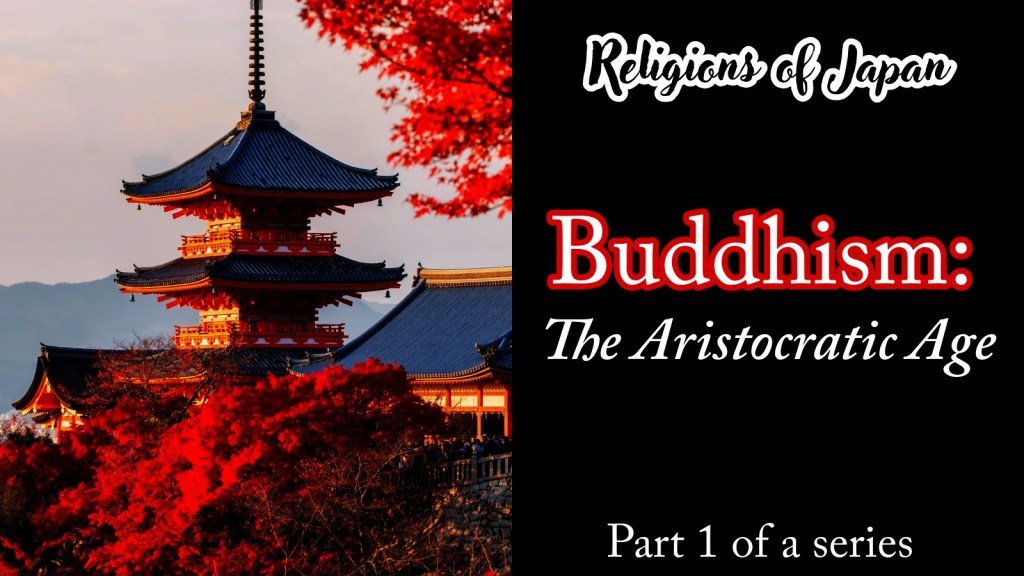
~ Introduction & Overview ~
What Is Buddhism?
Buddhism is both a philosophy of liberation and a world religion that began in northern India in the 5th–4th century BCE with the teachings of Siddhartha Gautama, known as the Buddha (“Awakened One”). At its heart are a few key ideas:
- The Four Noble Truths
- Life is marked by dukkha—suffering, impermanence, and dissatisfaction.
- The cause of this suffering is craving and attachment.
- Freedom from suffering (nirvāṇa) is possible.
- The path to that freedom is the Eightfold Path of ethical living, mental discipline, and wisdom.
- No Permanent Self
Reality is a flow of interdependent processes; clinging to the idea of a fixed “I” is the root of suffering. - Compassion and Wisdom
Practicing mindfulness, meditation, and ethical action cultivates both.
Over centuries Buddhism spread across Asia: Sri Lanka and Southeast Asia (Theravāda), Tibet and Mongolia (Vajrayāna), China, Korea, and Japan (Mahayana). Each region developed distinctive rituals and philosophies, but all share the Buddha’s insight that liberation comes from understanding the mind and acting with compassion.
Buddhism Arrives: Setting the Stage for a New Japan
When Buddhism first crossed the sea to Japan in the sixth century, it did more than add a new set of rituals to the islands’ spiritual life. It arrived as a complete cultural package—philosophy, art, architecture, medicine, political theory—and it collided with a society that was still forming a sense of national identity. The centuries that followed, stretching from the Asuka period (c. 538–710) through the Hakuhō or Kakuhō era (mid-7th century) and into the Nara period (710–794), became one of the most transformative epochs in Japanese history. These were the years when Buddhism shifted from foreign curiosity to state religion, when local kami worship fused with continental doctrine, and when Japan began to imagine itself as a unified nation rather than a loose federation of clans.
A Faith Carried by Diplomacy and Trade
The traditional date for Buddhism’s arrival is 538 CE, when the king of Baekje (a Korean kingdom) presented the Yamato court with a gilt-bronze Buddha statue and a set of sutras. Whether the first missionaries came slightly earlier or later, the point is clear: Buddhism entered Japan through international diplomacy, riding the same maritime routes that carried Chinese silk, Korean ironwork, and new systems of writing. This meant that from the start, Buddhism was not just a religion but a sign of civilized sophistication; a way for the Yamato rulers to show parity with their powerful neighbors.
Politics, Clan Rivalry, and the Seeds of a National Faith
The early decades were anything but peaceful. Powerful aristocratic families split over whether the foreign faith would strengthen or weaken their influence. The pro-Buddhist Soga clan championed the new religion, while the Mononobe and Nakatomi clans defended the older kami cults. Their conflicts were as much about power as theology. The Soga ultimately prevailed, clearing the path for Buddhism to take root, but the memory of that struggle shaped Japanese religious politics for centuries.
Among the most important figures of this era was Prince Shōtoku (574–622), often portrayed as a philosopher-prince and nation builder. He promoted the Seventeen-Article Constitution, sent embassies to China, and sponsored great temples like Shitennō-ji and Hōryū-ji. Under Shōtoku’s patronage, Buddhism became more than an import; it became a state-building ideology, a tool to centralize authority and to frame the emperor as a universal sovereign.
The Hakuhō Transition: Reform and Flourishing Art
Midway through the seventh century, after the Taika Reforms of 645, Japan embarked on a period of radical centralization modeled on China’s Tang dynasty. Historians call this the Hakuhō (or Kakuhō) era, a bridge between Asuka and Nara. Bureaucratic codes, land reforms, and a permanent capital all drew inspiration from the continent. Buddhism flourished as a visible emblem of the new order. Sculptors adopted supple Tang-style drapery, painters experimented with new pigments, and monumental temples such as Yakushi-ji and the rebuilt Hōryū-ji displayed an unprecedented blend of Korean technique and Chinese elegance. This was the moment when Buddhism shifted from being a tool of clan rivalry to a national art and ideology.
The Nara Period: Buddhism as State Religion
By 710 the court settled in Heijō-kyō (present-day Nara), Japan’s first true capital. Here Buddhism reached an imperial crescendo. The government recognized six doctrinal schools (Hossō, Kegon, Sanron, Ritsu, Jōjitsu, and Kusha). each with its own great temple and scholarly lineage. Monks became advisers to emperors; monasteries owned vast estates; Buddhist rites were integrated into state ceremonies. Emperor Shōmu (r. 724–749) famously declared himself a “servant of the Three Treasures” and commissioned the Great Buddha of Tōdai-ji, a bronze colossus meant to unify the nation spiritually and politically.
Yet even as Buddhism gained official status, it also began to blend with indigenous belief. Kami were interpreted as local manifestations of universal Buddhas, a syncretism later known as shinbutsu shūgō and eventually codified in the honji-suijaku theory. Far from displacing native worship, Buddhism wove itself into it, creating a religious fabric uniquely Japanese.
Why This Epoch Matters
The Asuka, Hakuhō, and Nara centuries laid the foundation for every later development in Japanese Buddhism: the rise of Zen and Pure Land, the esoteric grandeur of Shingon and Tendai, even the modern lay movements of the 20th century. They also produced an artistic legacy (wooden halls, bronze Buddhas, delicate murals) that still defines classical Japanese aesthetics. Understanding this formative period means understanding how Japan first embraced the outside world, negotiated the tension between foreign influence and native tradition, and forged a spiritual identity that endures today.
The Asuka Period: Dawn of Buddhism in Japan
The Asuka period marks the moment when Buddhism first took root on Japanese soil. Spanning roughly the late sixth to early eighth centuries, it was an age of cultural experimentation, political intrigue, and sweeping transformation. What began as a diplomatic gift from the Korean kingdom of Baekje became a catalyst for remaking Japan’s art, politics, and spiritual life.
Arrival from Across the Sea
The traditional date for Buddhism’s introduction is 538 CE, though some chronicles place it a little later, around 552. Envoys from Baekje presented the Yamato court with a gilt-bronze image of the Buddha, sacred sutras, and ritual implements. For the rulers of the Japanese archipelago, at that time a loose confederation of clans, these objects were more than religious tokens. They represented the sophistication of the Chinese and Korean civilizations that Japan admired and sought to emulate.
From the outset, Buddhism arrived not merely as a faith but as a comprehensive cultural package: written Chinese characters, architectural techniques, medicine, astronomy, and a political philosophy that could buttress centralized rule. The religion’s connection to powerful continental states made it an attractive tool for ambitious leaders eager to elevate Japan’s status.
Clan Rivalries and the Politics of Faith
But the new teaching did not win immediate acceptance. Instead, it became entangled in the bitter rivalries of the aristocratic clans that dominated Yamato politics. The Soga clan, eager to strengthen ties with the continent and consolidate their own power, championed Buddhism. Opposing them were the Mononobe and Nakatomi families, who saw the foreign faith as a threat to the kami-centered rites that legitimized their authority.
This conflict was more than theological hair-splitting. Temples and rituals meant land grants, labor, and political influence. To embrace Buddhism was to embrace a new order of society. Skirmishes between these factions occasionally turned violent. By the mid-sixth century the Soga emerged victorious, ensuring that Buddhism would not merely survive but thrive.
Prince Shōtoku: Philosopher and Statesman
The figure who best symbolizes the Asuka Buddhist revolution is Prince Shōtoku (574–622), a regent and statesman whose vision helped weave the new religion into the fabric of the state. Shōtoku issued the Seventeen-Article Constitution, a moral and political code that drew heavily on Buddhist and Confucian ideals. He dispatched embassies to China, seeking to learn from the advanced Sui dynasty, and sponsored the construction of temples that remain national treasures.
Among his most famous foundations is Shitennō-ji in Osaka, dedicated to the Four Heavenly Kings, and Hōryū-ji near Nara, which houses some of the world’s oldest surviving wooden buildings. Shōtoku also promoted the study of Buddhist scriptures, helping to create Japan’s first corps of learned monks. To later generations he became a near-mythic figure: a statesman-saint who embodied the marriage of political authority and spiritual wisdom.
Temples, Art, and the Birth of a Japanese Aesthetic
The architectural and artistic legacy of the Asuka period is extraordinary. Early temples borrowed heavily from Korean and Chinese models: pagodas with graceful eaves, golden halls adorned with bronze Buddhas, and intricate wall paintings. Yet even in these first decades, Japanese artisans began to develop a distinct style.
The celebrated Shaka Triad in Hōryū-ji’s Golden Hall, attributed to the sculptor Tori Busshi, shows the strong influence of Northern Wei Chinese art—elongated bodies, stylized drapery—but with a serenity and balance that would characterize Japanese Buddhist sculpture for centuries. Clay and lacquer statues, delicate murals, and the careful arrangement of temple precincts all expressed the new cosmology in tangible form.
Buddhism and the State
As Buddhism gained ground, it became an indispensable instrument of governance. Rulers saw in the religion a way to centralize authority, legitimize imperial power, and promote social harmony. Sutra recitations and temple rituals were believed to protect the nation from disaster and secure prosperity. Monks served not only as spiritual guides but also as diplomats, scholars, and physicians.
The court issued edicts to regulate the sangha (monastic community), granted land for temple construction, and sponsored large public ceremonies. The religion’s emphasis on merit and karmic reward also appealed to commoners, who increasingly participated in festivals and pilgrimages.
Interaction with Native Beliefs
Far from displacing Japan’s indigenous kami worship, Buddhism soon entered into a creative dialogue with it. Early records speak of shinbutsu shūgō, a blending of kami and Buddhas, where local deities were interpreted as protective spirits or even manifestations of Buddhas themselves. This syncretic impulse would later develop into the sophisticated honji-suijaku theory, but its roots were already visible in the Asuka period.
This integration helped Buddhism spread beyond the court. People could continue venerating their local kami while also embracing the new rites and teachings, creating a spiritual landscape that felt authentically Japanese.
Toward the Hakuhō and Nara Eras
By the early seventh century, the Asuka court had embarked on sweeping reforms inspired by Tang China. The Taika Reforms of 645 aimed to centralize power, reorganize landholding, and create a merit-based bureaucracy. Buddhism’s presence strengthened these ambitions, providing a unifying ideology and an international prestige that native kami cults could not match.
These changes ushered in the Hakuhō era, a transitional time when art, architecture, and governance matured in anticipation of the Nara period’s grand imperial projects. The stage was set for Buddhism to move from being the faith of a powerful few to the official religion of an entire nation.
Why the Asuka Period Matters
The Asuka period was more than a historical prologue; it was the crucible in which Japan’s unique form of Buddhism was forged. In these years:
- The political class learned to use religion as a tool of statecraft.
- Artists and architects laid the foundations of a distinct Japanese aesthetic.
- Buddhism and kami worship began a dialogue of mutual adaptation that would shape centuries of religious practice.
For anyone exploring Japanese culture (whether in art, literature, or even modern pop-horror that draws on Buddhist imagery) understanding Asuka Buddhism is essential. It is here, in the pagodas of Hōryū-ji and the reforms of Prince Shōtoku, that Japan first embraced a faith from abroad and transformed it into something uniquely its own.
The Hakuhō Era: Reform, Refinement, and the Maturing of Japanese Buddhism
As the Asuka period drew to a close, Japan stood on the threshold of an ambitious transformation. By the mid-7th century the Yamato state had survived clan warfare, adopted a powerful new religion, and begun looking to Tang China as a model for centralized government. The decades that followed, often called the Hakuhō or Kakuhō era (roughly 645 – 710 CE), were a time of political consolidation and cultural flowering. For Buddhism, these years marked the shift from fledgling import to fully integrated state religion, setting the stage for the grand imperial projects of the Nara period.
Defining the Hakuhō Moment
Historians use “Hakuhō” to describe the transitional age between the Asuka and Nara periods. The term itself derives from an ancient Chinese calendrical designation used in Japanese records around the late 7th century. It’s not a formally demarcated dynasty so much as a cultural and political phase, when reforms launched by the Taika coup of 645 began to reshape every aspect of Japanese life.
During this era, the court sought to build a Chinese-style centralized state; codified laws, census systems, tax codes, and an imperial bureaucracy. Buddhism became inseparable from that project. It was no longer simply a symbol of continental sophistication; it was a practical instrument for unifying the realm, sanctifying imperial authority, and presenting Japan as an equal partner in the Sinic world order.
The Taika Reforms: Blueprint for a Nation
The starting gun was the Taika Reforms of 645, triggered by a palace coup that eliminated the powerful Soga clan and elevated Prince Naka no Ōe (later Emperor Tenji). These reforms called for:
- Land Nationalization: All land theoretically belonged to the emperor, with peasants taxed in rice and labor; a direct borrowing from Tang China.
- Central Bureaucracy: Establishment of ministries and regional governors, creating a true imperial state.
- Legal Codes: The Ōmi Code (668) and later the Asuka-Kiyomihara Code (689) laid groundwork for the famous ritsuryō system of Nara.
Buddhism provided the ideological glue for these policies. Temples were built as state-protection centers, sutras were recited to safeguard the land, and the clergy offered the cosmic legitimacy of dharma to imperial rule.
Artistic and Architectural Renaissance
The Hakuhō period witnessed a striking refinement of Buddhist art, often called Hakuhō style, which softened the angular Asuka forms and embraced the graceful realism of Tang China:
- Sculpture: Figures such as the celebrated Yakushi Triad at Yakushi-ji show naturalistic body proportions, flowing drapery, and a gentle dynamism. Bronze casting reached new heights of detail.
- Painting and Mural Work: The murals of the rebuilt Hōryū-ji Kondō (after the 670 fire) display fluid lines and rich pigments inspired by Tang wall art and Central Asian motifs.
- Temple Layouts: Architects adopted grander compounds with symmetrically aligned halls and pagodas, reflecting a confident, orderly vision of the cosmos.
This artistic blossoming wasn’t just decoration; it projected the power of the state and the universal scope of Buddhism. Temples became both spiritual centers and political statements.
Expanding the Sangha
During the Hakuhō years, the monastic community (sangha) grew in numbers and influence:
- Ordination Centers: The state established official ordination platforms to control who could become a monk or nun, ensuring loyalty to the central government.
- Education and Scholarship: Monks studied not only sutras but also medicine, astronomy, and statecraft, serving as advisers and technicians.
- State-Sponsored Rituals: Nationwide ceremonies for protection against epidemics and natural disasters became standard, strengthening Buddhism’s role in public life.
This formalization brought new prestige but also tethered the sangha tightly to imperial authority, a relationship that would both empower and complicate Buddhism in later centuries.
Syncretism Deepens
Despite government attempts to regulate practice, popular religion remained fluid. The blending of kami worship and Buddhist cosmology, what later ages would call shinbutsu shūgō, accelerated. Local deities were reinterpreted as manifestations of Buddhas or bodhisattvas; Buddhist temples often maintained shrines to native spirits, and villagers saw no contradiction in honoring both.
This cultural give-and-take ensured that Buddhism did not feel foreign. Instead, it became the natural language of ritual, festival, and protection, a process that would continue to shape Japanese spirituality for centuries.
Key Figures of the Era
- Emperor Tenmu (r. 673–686): Consolidated the reforms and promoted grand temple construction, including Yakushi-ji.
- Empress Jitō (r. 686–697): Continued Tenmu’s policies, supporting temple patronage and codifying laws that stabilized the state.
- High-Ranking Monks: Figures such as Dōshō, who studied in China under Xuanzang’s disciples, brought back sophisticated Hossō (Yogācāra) teachings, laying the doctrinal groundwork for the Nara schools.
Toward the Nara Capital
By the turn of the 8th century the Yamato rulers were ready to fix their capital permanently at Heijō-kyō (Nara). The Hakuhō accomplishments, political centralization, flourishing art, regulated monastic institutions, made this possible. Buddhism stood at the heart of the new order: a religion of state protection, cosmopolitan culture, and spiritual legitimacy.
Why the Hakuhō Era Matters
If the Asuka period was the introduction of Buddhism, the Hakuhō era was its maturation. Here we see:
- Statecraft and Dharma fused into a single political vision.
- Art and architecture reaching a confident classical style that still defines Japanese aesthetics.
- Syncretic practice ensuring Buddhism’s acceptance across all social classes.
By the dawn of the 8th century, Japan was no longer merely borrowing from its neighbors. Through the crucible of Hakuhō reforms and artistry, it had begun to own its Buddhist identity; ready to enter the Nara period with temples of unprecedented scale and a vision of empire sanctioned by the Buddha himself.
The Nara Period: Buddhism Becomes the Nation’s Faith
When the imperial court moved to the newly built capital of Heijō-kyō in 710 CE, Japan entered what historians call the Nara period. After decades of experimentation in the Asuka and Hakuhō eras, the Yamato rulers were ready to showcase a fully centralized state modeled on Tang-dynasty China. Buddhism, which had arrived as a diplomatic curiosity less than two centuries earlier, now stood at the heart of government, art, and daily life.
A Permanent Capital for a New Order
The decision to establish a permanent seat of power at Heijō-kyō (present-day Nara) signaled confidence in the new imperial system. Built on a grid plan after the great Chinese city of Chang’an, Nara was more than a political hub; it was a statement that Japan had become a cosmopolitan empire. Wide avenues, walled palace compounds, and bustling markets framed a city where Buddhist temples dominated the skyline.
Unlike earlier “moving capitals,” Nara was meant to endure. That stability allowed the court to institutionalize Buddhism on an unprecedented scale.
The Six Nara Schools
During this era the government officially recognized six doctrinal traditions—often called the “Six Nara Schools” (Rokushū):
- Kegon – Centered on the Avataṃsaka Sūtra, emphasizing the interpenetration of all phenomena.
- Hossō – Yogācāra philosophy brought from China by Dōshō and others.
- Sanron – The “Three Treatise” school, rooted in Madhyamaka emptiness doctrine.
- Jōjitsu – A branch of Sanron focused on doctrinal exactness.
- Kusha – Abhidharma analysis of dharmic constituents.
- Ritsu – Vinaya school devoted to monastic discipline.
While their doctrines varied, all operated under direct state supervision. Monks were registered, temples funded, and rituals deployed to protect the realm. The sangha (monastic community) became a bureaucratic partner of government, responsible for both spiritual welfare and social stability.
Emperor Shōmu and the Great Buddha
The most powerful patron of this imperial Buddhism was Emperor Shōmu (r. 724–749). Confronted by smallpox epidemics, crop failures, and political unrest, Shōmu declared himself a servant of the Three Treasures (Buddha, Dharma, Sangha) and launched a nationwide program of temple construction.
- Provincial Temples (Kokubunji): Every province was ordered to build a monastery and a nunnery to pray for the state’s protection.
- Tōdai-ji and the Great Buddha: The centerpiece was the colossal bronze statue of Vairocana (Dainichi) Buddha, completed in 752. Standing over 15 meters tall and sheathed in gold, it was the largest bronze casting attempted anywhere in the world at the time. The eye-opening ceremony drew dignitaries from across Asia, underscoring Japan’s international connections.
These projects drained the treasury but proclaimed an unmissable message: the emperor ruled with cosmic legitimacy, guarded by the universal Buddha.
Cultural Cosmopolitanism
Nara was a melting pot. Envoys from Tang China, the Korean kingdoms, and even Southeast Asia brought books, medicines, music, and art. Buddhist scriptures arrived in vast numbers, fueling an explosion of scholarship and translation. Calligraphy, lacquerwork, and sculpture flourished:
- Statues combined Chinese Tang realism with a growing Japanese elegance.
- Painting and Decorative Arts, like the shimmering murals of the Tōshōdai-ji and the treasures of the Shōsōin Repository, displayed influences from as far west as Persia and India.
- Literature blossomed: the Man’yōshū, Japan’s first great poetry anthology, was compiled in this cosmopolitan atmosphere.
Syncretism with Kami Beliefs
Even as Buddhism gained imperial sponsorship, it continued to intertwine with native kami worship. Local deities were increasingly interpreted as manifestations (suijaku) of cosmic Buddhas (honji), a process that would later be called honji-suijaku theory. Shrines stood within temple precincts, and many rituals honored both Buddhas and kami without contradiction.
This blending ensured that Buddhism felt indigenously Japanese, not merely a foreign transplant. Ordinary villagers could venerate their local mountain spirit while also praying to Kannon or Amida for protection.
Challenges and Corruption
State patronage brought power… and problems. Monasteries amassed vast landholdings and wielded political influence. Rivalries among temples sometimes turned violent. Court intrigues, such as the rise of the monk Dōkyō, who nearly became emperor through the patronage of Empress Shōtoku, alarmed aristocrats and exposed the dangers of a church too close to the throne.
These tensions sowed the seeds for later reforms. By the end of the century the court decided to move the capital to Heian-kyō (Kyoto) in 794, partly to escape Nara’s entrenched monastic power.
Everyday Buddhism
While grand temples captured headlines, Buddhism also permeated daily life:
- Funerary Rites – Cremation became more common, along with Buddhist memorial services.
- Medicine & Calendar Science – Monks served as physicians and astronomers, blending spiritual and practical roles.
- Pilgrimage & Lay Piety – Ordinary people visited famous temples, sponsored sutra recitations, and joined confraternities.
By the end of the Nara period, Buddhism was not only the ideology of the elite but a shared cultural foundation across social classes.
Legacy of Nara Buddhism
The Nara period left Japan with:
- Monumental architecture—Tōdai-ji, Kōfuku-ji, Tōshōdai-ji—still among the country’s greatest cultural treasures.
- A fully developed ritsuryō state, where law, ritual, and doctrine intertwined.
- The template for later Buddhist movements: scholastic study, large monasteries, and the blending of imported and native traditions.
From Nara to Heian: a Look at Part 2
By 794, when the capital shifted to Heian-kyō, the groundwork for a uniquely Japanese Buddhism was complete. The next installment of this series will explore how that foundation gave rise to esoteric Tendai and Shingon, the aristocratic culture of the Heian court, and eventually the populist Pure Land and Zen movements of the medieval age.
Further Reading
- Alicia Matsunaga, The Buddhist Philosophy of Assimilation – A deep dive into honji-suijaku theory and how Buddhism blended with Shinto, perfect for understanding early syncretism.
- Daigan & Alicia Matsunaga, The Foundations of Japanese Buddhism Vol. 1: The Aristocratic Age – Still the go-to English study of Asuka and Nara Buddhism (and it inspired the title of this blog post).
- George J. Tanabe & Willa Jane Tanabe, Japanese Buddhist Temples in Hawaii (intro chapters) – Surprisingly clear overview of how early Japanese Buddhism functioned before its diaspora.
- William E. Deal, Handbook to Life in Medieval and Early Modern Japan – A broad cultural reference with strong sections on religion and daily life.
- Richard Bowring, The Religious Traditions of Japan 500–1600 – Wide-ranging and very readable; excellent on Nara and Heian Buddhism.
- Donald F. Lopez Jr. (ed.), Buddhism in Practice – Anthology of primary sources, including sutras and rituals relevant to early Japan.
- John Breen & Mark Teeuwen, A New History of Shinto – Helpful for seeing how kami worship interacted with Buddhism from the start.
Sources & References
- Daigan Matsunaga & Alicia Matsunaga. The Foundations of Japanese Buddhism, Volume 1: The Aristocratic Age. Tokyo: Buddhist Books International, 1974.
- Daigan Matsunaga & Alicia Matsunaga. The Foundations of Japanese Buddhism, Volume 2: The Mass Movement. Tokyo: Buddhist Books International, 1976.
- Alicia Orloff Matsunaga. The Buddhist Philosophy of Assimilation: The Historical Development of the Honji Suijaku Theory. Sophia University, 1969.
- Richard Bowring. The Religious Traditions of Japan 500–1600. Cambridge University Press, 2005.
- William E. Deal. Handbook to Life in Medieval and Early Modern Japan. Oxford University Press, 2005.
- Mikael Adolphson, Edward Kamens, and Stacie Matsumoto (eds.). Heian Japan: Centers and Peripheries. University of Hawaii Press, 2007.
- Primary sources such as the Nihon Shoki (Chronicles of Japan, 720) and the Shoku Nihongi (797) for contemporary accounts of temple building, imperial edicts, and early Buddhist rituals.
 J-Horror Blog
Leave a comment