
Masato Harada’s Inugami stands apart from its flashier J-horror contemporaries like Ringu or Ju-On: The Grudge. While those films deliver quick, iconic scares and urban legends, Inugami unfolds as a slow-burning, rural folk horror, rooted deeply in Japanese tradition and the lives of a marginalized community. The result is a fascinating exploration of how horror can intertwine with social commentary, gender, and the haunting trauma of inheritance.
( Warning: Contains Spoilers )
The film begins with Miki Bonomiya (Yuki Amami), alone in her paper workshop, engaged in the careful, almost meditative practice of making traditional washi. The camera lingers on water, pulp, and her skilled hands, immersing us in her world; one shaped by solitude, tactile labor, and unbroken tradition. This is a life deeply bound to place and process, set in a rural landscape defined by quiet cycles and ancient customs.
As the story shifts, we’re introduced to Akira Nutahara (Atsuro Watabe). He’s first seen riding his motorcycle through the winding, forested mountains in a sequence that feels both Ghibli-esque and heavy with foreboding. Stopping to sketch the scenery, Akira is established as both curious and vulnerable: an outsider arriving in a village that guards its secrets.
Back in Omine, Miki is outside, hanging sheets of wet paper to dry. During this everyday moment, she perceives a mirage-blurry entity—a huge, almost invisible presence like a kaiju-dog rendered only as a heat shimmer—moving down the mountainside in front of her. The entity barrels through Miki’s world as a powerful gust of wind, knocking her glasses off and cracking a lens, blowing over racks of drying paper, and disturbing the order inside her workshop. The moment is supernatural, but not in the manner of a jump scare; it’s uncanny, as if nature itself has turned threatening. Here, Inugami signals its unique approach: the supernatural manifests as a disruption within the fabric of daily life.
Soon after, Akira’s motorcycle runs out of gas. A young delivery man, Seiji Doi (Eugene Harada), stops to offer him a ride to the gas station in Ikeno, but says he must first make a delivery in Omine. This simple act immediately casts the Doi as both gatekeepers and intermediaries between outsider and village: a family tied to both hospitality and authority.
As Miki is cleaning up the mess left by the wind, her sister-in-law Sonoko (Shion Machida) bursts in, furious about her husband Takanao’s (Kazuhiro Yamaji) reckless spending and online gambling. The real horror here is rooted in domestic struggle and economic decay, grounding the supernatural in very real, very human failure. When a drunken Takanao appears, he’s dressed in samurai armor, in relation to performing the ancestor rites. He slaps Sonoko and insists on wearing the armor: a gesture that is more pathetic than impressive, revealing his instability and desperate attachment to hollow patriarchal traditions. His authority is performative, and the marriage itself is toxic, marked by emotional vacancy and role-playing. Sonoko clings, sitting on his knee and fishing for affection, while Takanao is miserably unmoved… already checked out of the relationship. Their dynamic is both quietly sad and deeply sinister, reflecting a family stuck in unhealthy patterns.
Akira, meanwhile, is driven by Seiji (the paper delivery man) through the countryside. Akira is an outsider not only by origin but by his lack of village knowledge. As they stop in Omine to deliver paper to Miki, Seiji introduces Akira, linking the outsider to the village’s internal economy. The Bonomiyas, though marginalized, are essential to both tradition and commerce.
That evening, the film lingers in the Bonomiya home. The atmosphere is heavy and claustrophobic, even in the presence of younger family members. A brief, unsettling flashback shows Miki giving birth in a hospital, her memory fragmented and full of pain. When Miki wakes in the middle of the night, she finds her vision clearer without her glasses, a subtle sign of the supernatural’s effect on her. That night, she hears a woman counting. Her mother (Shiho Fujimura), dead a year prior, appears, speaking about bad dreams. The scene blurs the line between reality and dream, and is loaded with subtext about legacy, ancestry, and the quiet transfer of generational trauma.
Everyday interactions, like Miki’s conversation with the newspaper delivery girl (Yuriko Hirooka), emphasize her position: embedded in the community, yet marked by isolation and suspicion. Later, while making breakfast with Momoyo Bonomiya (Kanako Fukaura), the two women share their strange dreams. The film repeatedly links food, dreams, and domestic labor, suggesting that horror grows from the soil of daily life and is passed on, especially among women.
Miki’s trip to Ikeno for her late mother’s medicine is telling. Even in death, her mother’s needs (and perhaps her spirit) shape Miki’s routines, blurring the boundary between duty to the living and the dead. At the pharmacy, local men gather. Among them, the mayor (Koichi Sato)—an aged, former hunter—recounts how he killed 999 animals but, after a dream, vowed never to kill a thousandth. He claims the 1000th animal might be the one to save Omine. This motif of an unfinished quest and the spiritual weight of numbers foreshadows that something wild, perhaps supernatural, lies at the village’s heart.
At the local middle school (still on summer break), the faculty prepare for the coming classes. New teacher Akira’s calligraphy skills impress his colleagues, marking him as respectful of tradition but still fundamentally an outsider. Seiji, a bridge between worlds, quietly courts Rika (Miyu Watase), a young Bonomiya woman who works at the school, with a bento box lunch. Outside, their gentle conversation aboard a rowboat on a nearby pond, with Rika speaking of a nightmare where Seiji perishes in a car accident and Seiji sharing that’s how his parents died, is filled with melancholy and longing; a contrast to the toxic decay of the older generation.
As Akira explores the woods, he becomes more deeply entangled with Omine and with Miki herself. She is shown working in her workshop, her legs unexpectedly youthful and her gray hair fading. The inugami’s presence, or perhaps Akira’s arrival, has begun to reverse time for her. This transformation is both folk-mythic and poignant: a sign of love and magic, but also of impending tragedy.
Akira watches Miki at work, fascinated. Their interactions are charged with both reverence and unease, as he sees her not only as a woman but as the living embodiment of the uncanny. When she reveals she has never left the island and never will, it’s less resignation than a prophecy; her life is both bounded and doomed by her birthplace. Her ties to Seiji’s company, and her centrality to the local economy, reinforce the paradox: essential to tradition, but still “other.”
When Akira, swept up in inspiration, accidentally dirties one of Miki’s paper sheets as they’re drying outside, she rushes to save it. The moment is loaded with symbolism: the fragility of beauty, legacy, and reputation, and the way outside forces (or fate) can stain what was once pure. Akira, embarrassed, quickly & quietly leaves, underscoring his own outsider status.
Seiji’s visit to his grandmother Kanako Doi, the head of the greater family, further exposes the rigid social hierarchy. The Bonomiyas are the burakumin branch: descendants of a stigmatized class. The grandmother’s open disdain for Miki, whom she sees as cursed, shows how deeply superstition and prejudice are woven into village life. Seiji’s resistance to this bigotry and his affection for Rika represent a newer generation that questions inherited cruelty.
At night, the small domestic struggles continue; Sonoko’s frustration at Takanao’s “no TV” rule (but computers & the internet are permitted, due to Takanao’s failing internet business) is another facet of male control masquerading as tradition. The home feels less like a haven and more like a prison, with customs that have lost their meaning.
When news breaks of a family murder-suicide vacationing from Tokyo, Takanao blames the inugami, echoing the mayor’s words and stoking communal fear. Once again, the Bonomiyas are blamed for disaster, not because of evidence, but because they make convenient scapegoats. The film exposes how marginalized people bear the brunt of collective anxiety, often with tragic results.
Out in the woods, Miki forages for herbs and encounters Akira sketching. As rain falls, they take shelter together inside the hollow trunk of a massive tree; a space that is both womb-like and sacred. Here, Miki confides that she once became pregnant in this very place, the tree now a symbol of memory, fertility, and trauma. Their intimacy deepens, shifting their relationship from curiosity to a bond of shared secrets and vulnerability.
This encounter leads to Akira and Miki passionately making love. The film treats their union with melancholy tenderness, highlighting both the inevitability and the peril. In folk horror, sexual union with a marked or cursed woman often triggers the supernatural. Here, it accelerates Miki’s transformation, as she grows more vibrant and youthful. Yet the act is shadowed by the knowledge that love alone cannot lift the weight of the curse or the community’s suspicion.
As their love grows, so does Takanao’s jealousy and possessiveness. He begins scheming with Grandma Doi to sell family land for a golf course venture, betraying both economic and spiritual ties. During a family meeting, Grandma Doi publicly shames Miki, exposing the secret of her past with Takanao and the child she was said to have lost. Miki’s icy glare is followed by Kanako Doi’s sudden, supernatural death; her skin blackening as she coughs up blood. Whether this is the work of the inugami or the poison of malice finally turning inward is left ambiguous, but the effect is the same: Miki is blamed, and the villagers’ scapegoating reaches fever pitch.
At the wake, Takanao attempts to assault Miki, confirming the incestuous obsession that has haunted their strained relationship. The village’s hysteria culminates in a violent assault on Miki’s workshop, with Akira powerless to intervene. Miki’s grief explodes, and she pushes Akira away, determined to endure her fate alone. Ultimately, however, they reconcile and plan to leave, but Miki cannot yet abandon her mountains, her identity too entwined with the land and its rituals.
That night, the violence escalates further. Sonoko, driven mad, murders her son and wounds Takanao. She is found later after hanging herself in the forest. The mayor warns the Bonomiyas, the following morning, that the villagers are preparing to burn them alive at their coming ancestor ritual, signaling the complete collapse of order and the return to primordial violence. Seiji goes to the police, but they offer no help, underscoring the abandonment of those marked as “other.”
The film’s most devastating twist is revealed by an older nurse (Hide Ishiyama) brought to the Bonomiya men by the mayor Mimoto, who was present at the hospital the day Miki gave birth some twenty years prior: Akira is actually Miki and Takanao’s lost child, believed dead but in fact adopted out and returned, unknowingly, to the village as the “outsider.” This revelation reframes the entire story as a cycle of generational trauma, inescapable curses, and accidental incest; a folk horror motif that underscores the impossibility of breaking free from ancestral sin.
The climactic ancestor ritual atop the mountain becomes a scene of horror. Sake cups laced with poison kill Momoyo and other relatives as Takanao, either in collusion with the villagers or gone mad, orchestrates mass murder of his clan. Chaos erupts; the family self-destructs amid centuries of shame and violence. Many manage to escape with the help of Akira and Seiji. In the aftermath, Akira seeks out Miki at the summit, while the mayor waits alone in the surrounding woods, armed, prepared to finish the family’s destruction.
Takanao nearly kills Miki but, briefly seeing her as his dead mother, hesitates. Miki smashes the family’s inugami urn over his head, symbolically shattering the vessel of the curse. Akira kills Takanao as Takanao reveals their true familial connection, intensifying the tragedy. Fleeing with Miki, Akira is shot by the mayor, but the blurry, invisible inugami seems to shield him, redirecting the would-be fatal bullet. In a final, folkloric gesture, Miki licks Akira’s face like a dog, reviving him, as if the spirit of the inugami now acts out of love rather than vengeance.
In the aftermath, Akira and Miki reunite with Seiji and Rika by the pond, then escape on Akira’s motorbike, leaving behind the mountains, the curse, and the ruins of the village for Tokyo. The ending is ambiguous; they have escaped, but the trauma and supernatural legacy they carry suggest the past can never be fully left behind.
Inugami concludes as a devastating meditation on the impossibility of escaping one’s history. The cycles of trauma and violence cannot be defeated by love alone, yet love and the struggle to survive are all that remain when the fire burns out. The film’s feminist currents run deep: it is a story about the right to choose one’s fate, the monstrousness of conformity, and the price of breaking free from tradition. Even in flight, the shadow of inheritance lingers; its final, lingering horror both mournful and hauntingly beautiful.
Symbolism, Analogues, and Themes
Inugami is deeply rooted in the folk horror tradition, where the greatest dangers emerge not from external invaders, but from old secrets festering within the land, the family, and the body. The Bonomiya family, cursed and isolated, stand as the living link to ancient rural beliefs about spirits; specifically, the inugami, or dog spirits, summoned for protection but inevitably bringing misfortune.
At its heart, Inugami is about the curse of inheritance: both the supernatural legacy of the Bonomiya bloodline and the social, emotional, and gendered trauma passed from parent to child, husband to wife. It explores the ongoing discrimination against burakumin (historically ostracized communities in Japan, often associated with “unclean” jobs or hereditary stigma) through the Bonomiya’s status as a “branch family” and the villagers’ willingness to blame them for every misfortune.
Much of the tension in the film comes from the collision between the world of ancient ritual and the encroachment of the modern: credit card debt, internet gambling, urban migration, and the decline of traditional crafts (like Miki’s papermaking). The supernatural is inextricable from sexuality and transformation, but always with an undercurrent of pain and risk. The movie refuses clear answers, whether about the reality of the curse, the boundaries between guilt and innocence, or the possibility of escape.
Symbolism: Inugami is saturated with the symbolism of ritual; both its power to bind a community together and its darker potential to imprison those it is meant to protect. The family’s ancestor rites, the meticulous craft of papermaking, and the rhythms of rural life all serve as emblems of continuity and belonging. Yet these rituals are double-edged: they offer comfort and a sense of identity, but they also act as chains, yoking individuals to the weight of history and expectation. When tradition is corrupted… by modernity, by personal greed, or by the failure to confront buried shame… the boundaries between sacred and profane blur, and horror seeps inexorably into daily life.
The Bonomiya family’s rites are not only spiritual but bodily. Gender and sexuality, especially as they manifest in the lives of women like Miki and Sonoko, become battlegrounds for the curse’s expression. Their bodies are marked, possessed, and ultimately sacrificed to uphold a patriarchal legacy that demands silence and suffering from those it claims to protect. The very rituals meant to honor ancestors are also mechanisms of control, policing women’s choices and punishing those who deviate from prescribed roles. The supernatural curse is inseparable from the generational trauma and repressed desires festering beneath the surface.
The film’s most disturbing undercurrent, Takanao’s incestuous fixation on Miki, serves as a symbol of how trauma and abuse perpetuate themselves within families, sheltered by tradition and secrecy. There is nothing romantic or redemptive about his obsession. Instead, it exposes the rot at the heart of the family: the way shame, violence, and desire are folded into the fabric of ritual, passed from one generation to the next under the guise of duty. The inugami itself, a dog-spirit born of pain and ritual, embodies this cycle, its presence felt in every gust of unnatural wind and every act of scapegoating the family endures.
In contrast, Seiji Doi stands as a symbol of rationality and the possibility of change. Young, modern, and skeptical, he challenges the fatalism and superstition that rule the village. Seiji’s outsider-adjacent perspective reveals both the arbitrariness of tradition and the cruelty of inherited fear. He is not immune to the curse’s reach, but his refusal to scapegoat or indulge in superstition offers a slim hope that cycles of violence and blame can be interrupted.
The landscapes of Inugami (lush mountains, isolated villages, the ever-present forests) are more than just setting; they symbolize the boundaries between seen and unseen, known and unknown. The land is haunted not simply by spirits, but by the memories and sins of those who inhabit it. Water, paper, wind, and blood (all recurring elements in the film) become vehicles for the transmission of both beauty and horror, binding characters to one another and to the past in ways they cannot fully escape.
Ultimately, Inugami uses its rich symbolic language to interrogate the costs of tradition, the dangers of repression, and the inescapable inheritance of trauma. Every ritual, every relationship, every gust of supernatural wind is a reminder that what is buried will always find a way to return.
Analogues: Inugami sits firmly in the lineage of both Japanese and Western folk horror, drawing on a shared unease about the power of landscape, tradition, and the secret histories that shape rural life. Like Noroi, and Western classics such as The Wicker Man or Blood on Satan’s Claw, Inugami transforms the natural world (the mountains, forests, and mists) into something almost sentient, alive with memory and threat. The village’s isolation doesn’t just mark it as backwards or quaint; it turns it into a pressure-cooker for ancient anxieties, where rituals meant to preserve the community risk unleashing forces that can never be fully dismissed or controlled.
Yet while Western folk horror often pits a modern outsider against the dark heart of an old world, Inugami complicates this dynamic by making its protagonist, Miki, both a product and a prisoner of her traditions. The film’s gaze is inward, turning rural ritual and family history into both sanctuary and trap. The curse isn’t an external threat; it is intimate, familial, and utterly inescapable. This reflects anxieties specific to Japan: the tension between ancestral obligation and the desire for individual autonomy, the pressure to maintain appearances, and the lingering wounds of ostracism and inherited shame.
There are echoes, too, of Japanese literary and cinematic traditions. The presence of the inugami (dog-spirit) directly references regional folklore and the long tradition of animal spirits (tsukimono) in Japanese horror. Films like Kwaidan and Onibaba similarly explore the blurred boundaries between the supernatural and everyday suffering, often focusing on women’s roles as both guardians and victims of tradition. Inugami’s quiet pace, attention to craft, and use of natural motifs place it in conversation with these older works, even as its themes (greed, taboo, repression, and the violence of inheritance) are starkly contemporary.
Finally, the film’s themes of incest, scapegoating, and the cyclical return of trauma resonate with a broader global tradition of rural Gothic storytelling, from Greek tragedy to Southern Gothic literature. In every tradition, the message is similar: what is buried in the soil (whether secrets, bodies, or spirits) will eventually find a way back to the surface, demanding to be acknowledged, atoned for, or released.
Themes: At its core, Inugami is a meditation on generational trauma and the impossibility of escaping the wounds inflicted by family, tradition, and the land itself. The central revelation (that Akira, the outsider drawn to Miki, is in fact the child of an incestuous union between Miki and Takanao, thought dead but returned) brings the curse full circle. In classic folk horror fashion, the sins and secrets that were buried are quite literally embodied in the next generation. The past is not just a shadow; it is reborn in flesh, demanding to be acknowledged and, inevitably, suffered through again.
The film’s treatment of community dynamics is equally unflinching. When threatened (by change, scandal, or the unexplained) the village turns inward, seeking scapegoats among its own members. The Bonomiya family, already marked by their burakumin ancestry and outsider status, become targets for every misfortune, their pain both weaponized and ignored by the wider community. The women, especially Miki and Sonoko, bear the brunt of this violence, their bodies and choices policed and sacrificed in the name of tradition. This cycle of blame, exclusion, and victimization becomes the true “curse” haunting the village, more corrosive than any spirit.
Attempts to break free from this fate (whether through economic schemes, denial of heritage, or flight to the city) are depicted not as solutions but as sources of new pain. The idea that the curse might be “sold off” with family land, or left behind by moving away, proves illusory; trauma is persistent, adapting itself to new circumstances and new generations. The rituals meant to contain and heal instead become vehicles for further harm when their meaning is lost or corrupted, turning family and community against themselves.
A pervasive theme is the failure of institutions (police, elders, and the very structure of the family) to protect the innocent or resolve conflict. The authorities are ineffectual or indifferent, leaving the vulnerable to fend for themselves. The elders cling to hollow rituals, incapable of adaptation or empathy. The family, instead of being a source of safety, becomes a crucible for suffering, repression, and transgression. The film’s bleak vision is of a society where the very mechanisms meant to bind and protect instead perpetuate violence and silence, unable to evolve or atone.
Inugami ultimately asks whether healing is possible in a world so saturated with secrecy, shame, and unaddressed wounds. Its answer is ambiguous at best: while cycles can be interrupted through acts of resistance, rationality, or love, they cannot be truly broken without reckoning with the buried past. The landscape itself remains haunted, a living reminder that what is not faced will always find a way to return, demanding recognition in the most intimate and painful ways.
Verdict
Inugami stands as a somber, poetic exploration of how families, villages, and entire cultures are haunted: not just by literal spirits, but by the wounds of history, the weight of tradition, and the cruelties of exclusion and silence. Its folk horror is quieter than its contemporaries, but all the more devastating for its focus on slow decay, ritual repetition, and the pain of those forced to carry the past for everyone else.
It is a film about cycles of abuse, desire, scapegoating, failed healing and the ways we are shaped by the places and stories that refuse to let us go. The inugami are not merely monsters, but metaphors for all the things that live just beneath the surface of a community: invisible, denied, but waiting for the right moment to return.
I very much enjoyed the film and would recommend that anyone interested in J-horror give it a watch. Inugami is a haunting, atmospheric example of Japanese folk horror that lingers long after the credits roll. Its slow-burn tension, complex characters, and powerful exploration of tradition and trauma make it well worth seeking out for fans of the genre.
Notes:
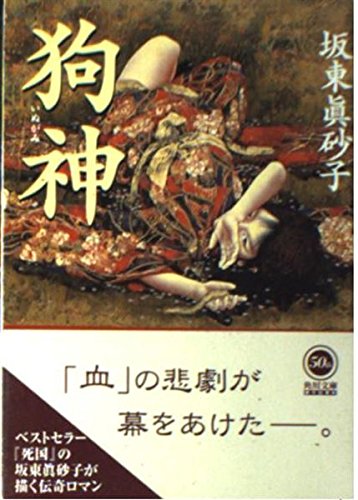
The film Inugami was based on the 1996 novel of the same name by Masako Bando; “Dog God” is an alternate title when listed in English. It released to moderate success in Japan and has never been officially translated into English. This translation work will be an ongoing side-project for me.

 J-Horror Blog
Leave a comment